"The Domaine Santa Duc has emerged in just over a decade as the number one estate for quality in Gigondas. […] Is this the finest estate in Gigondas ?
As the following notes demonstrates, Santa Duc combines the muscle, richness and fire of a classic Gigondas with a degree of elegance and purity that many wines of this appellation lack."
Robert M. Parker, Jr. - The World’s Greatest Wine Estates
2012 is an important vintage for us, but also for organic wine. It is indeed the first vintage that will produce truly certified organic wines, due to the new European regulation for organic wine making. Up to now, wines could only be labelled as “made from organically grown grapes”. This year, they will be fully organic, from grapes to bottles. At Domaine Santa Duc we welcome this new regulation with joy and tranquillity. Restrictions like for the use of enzymes or lower sulphite concentrations do not bother us, as we keep our wine making natural and only use little amounts of sulphites on our wines.
A good glass of... Domaine Santa Duc Gigondas Prestige des Hautes Garrigues 2010
Six months after bottling we would like to refer to a new look at our Prestige des Hautes Garrigues and the stunning 2010 vintage.
At the first sniff, the nose is rather reserved, but it opens up quickly, evolving towards intensity and aromatic complexity. A lot of fruit and wild herbs – sweet and sour cherry, blueberry and raspberry, laurel and rosemary – attest the youth of the wine in the same way as cocoa, blond tobacco and cinnamon witness its ageing in wooden tanks for 18 months. On the palate freshness and minerality rule over volume and power, creating an elegant and feminine wine, whose powerful tannin structure though should not be underestimated. Pepper mingles with fruits, smoke with wild herbs, while dried figs and preserved lemons give length and depth to the final.
According to Robert Parker, this wine is sensational. “Its inky/purple color is accompanied by glorious aromas of creme de cassis, kirsch, blackberries and a cornucopia of roasted herb, meat and licorice smells. It possesses fabulous intensity, a multidimensional mouthfeel and a tremendously long finish that lasts 40+ seconds. This beauty should drink well for two decades.”
2012 - a vintage of strategy and patience in the Rhone Valley
Vendanges 2012 en Vallée du Rhône - Domaine Santa Duc
It has been a vintage full of ordeals for many wine-growing regions in France. After the very hard frosts in February, budburst was quite heterogeneous in the Rhône valley. But due to “fertile” spring weather, full of rain and sunshine, vegetation caught up easily before flowering.
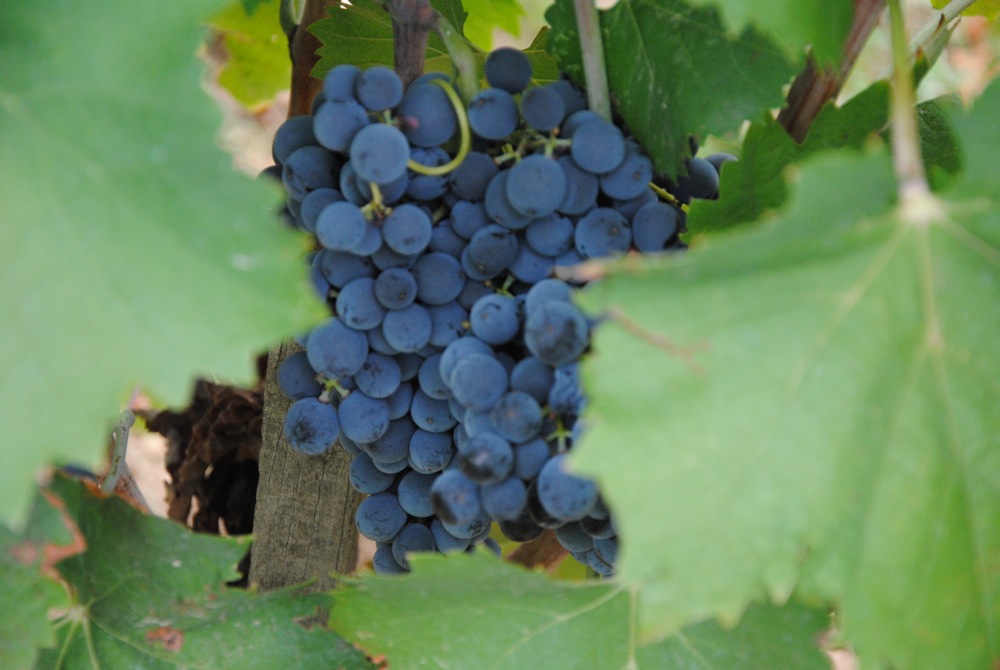
After a warm summer and dry weather in August, we started harvesting on September 17th. Ripe and well-balanced grapes allowed picking Syrah, Cinsault and some early ripening Grenache vineyards before the rainfalls late September. Rain was rather beneficial to our late Grenache and Mourvèdre vineyards, allowing them to proceed their ripening.
A good balance between sugars and acidity, showing potential alcohol around 14% by volume and pH between 3,5 and 3,7, forecasts juicy and generous wines for this vintage. It looks like every vineyard gave us grapes with a lot of character and personality, which is rather promising for the blending and the ageing to be done.
Harvest in Vacqueyras and Gigondas with Yves Gras of Domaine Santa Duc
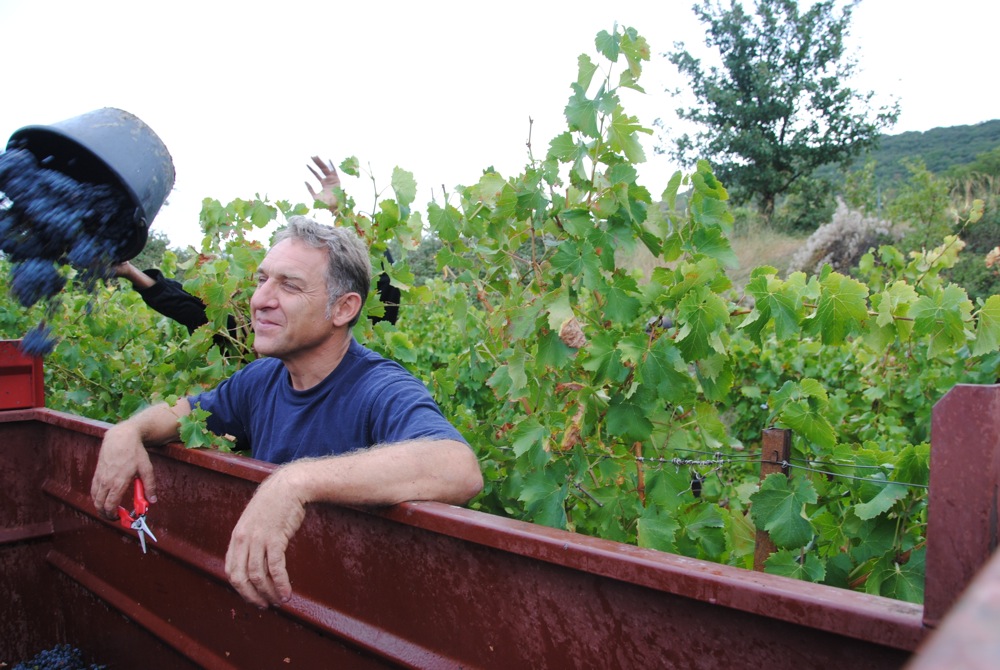
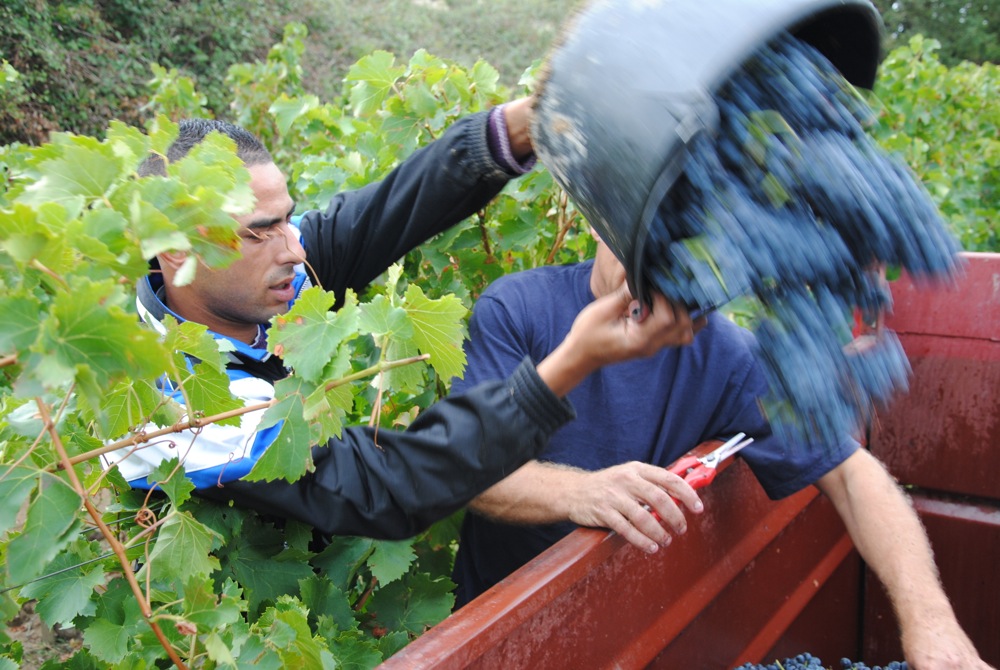
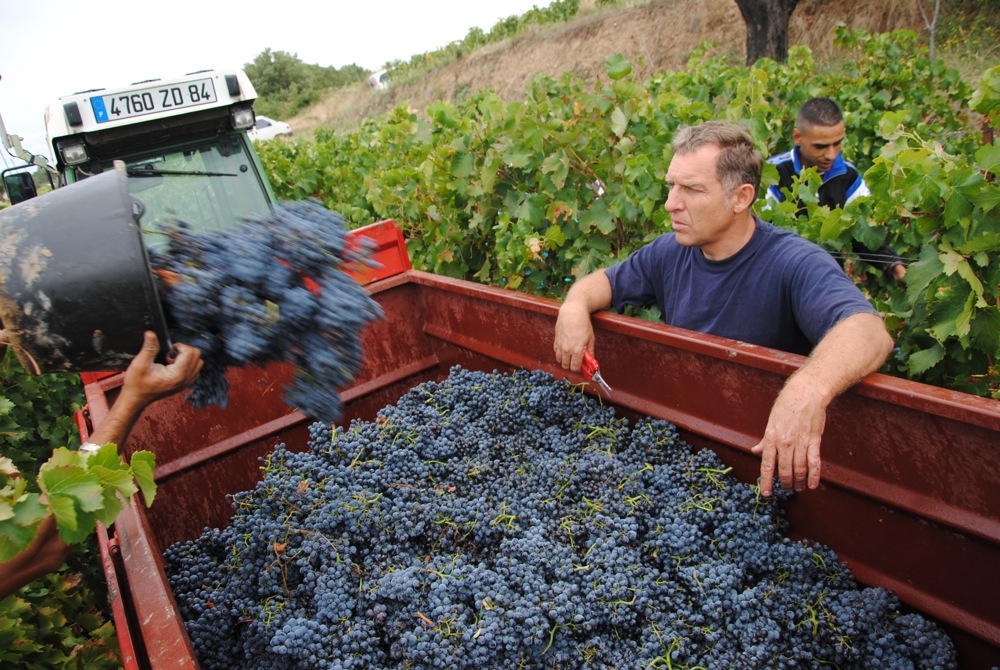
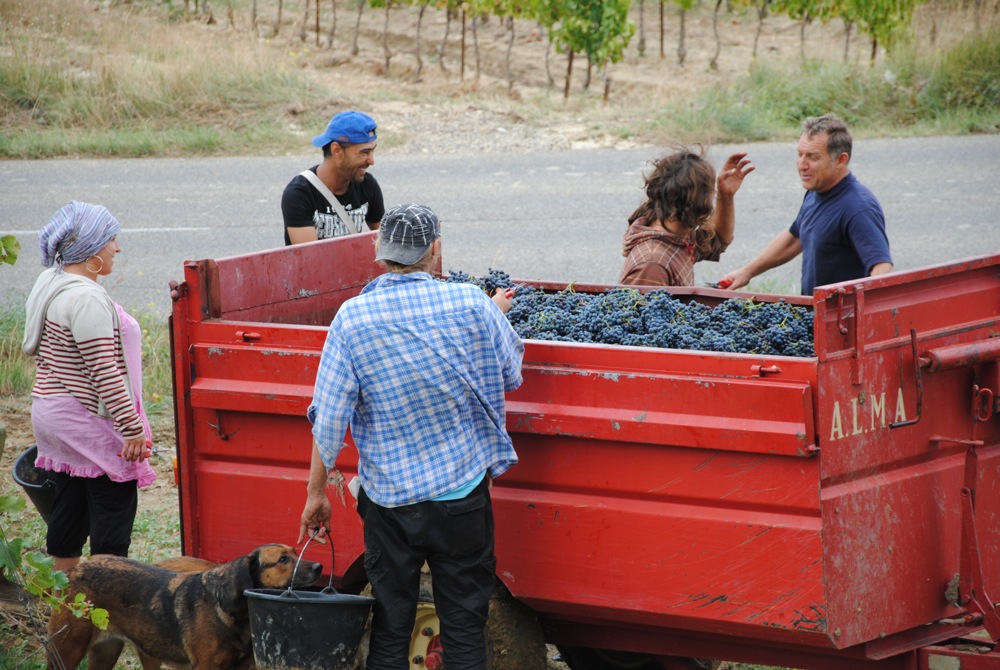
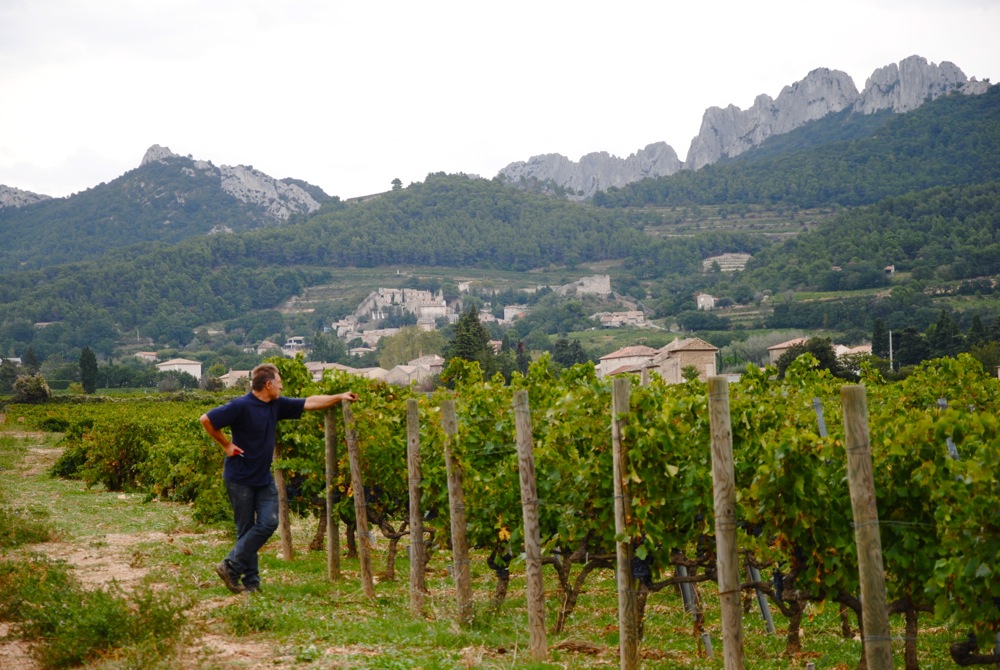
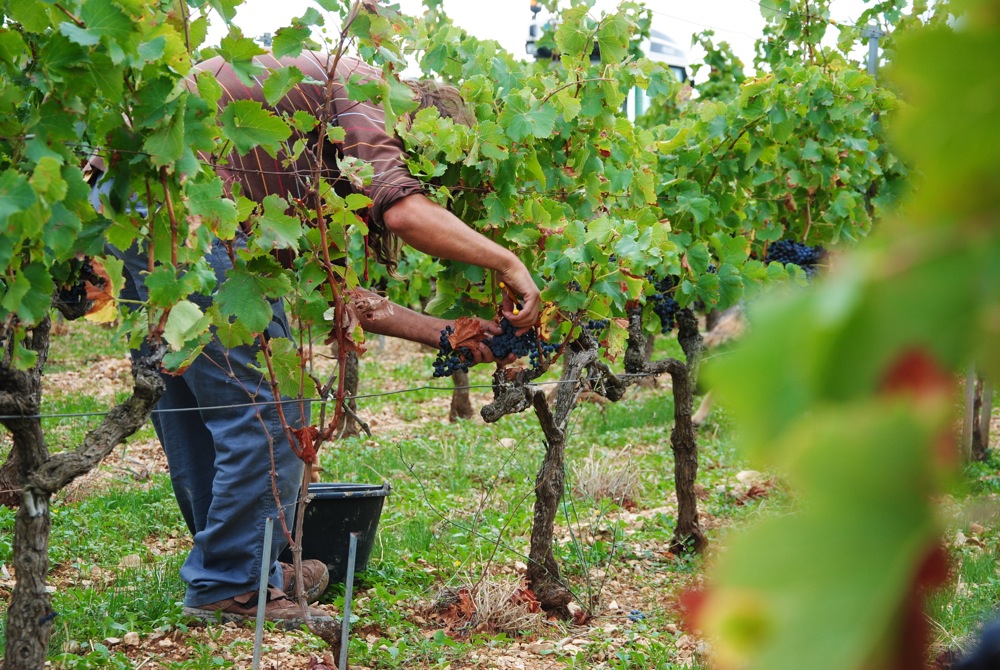
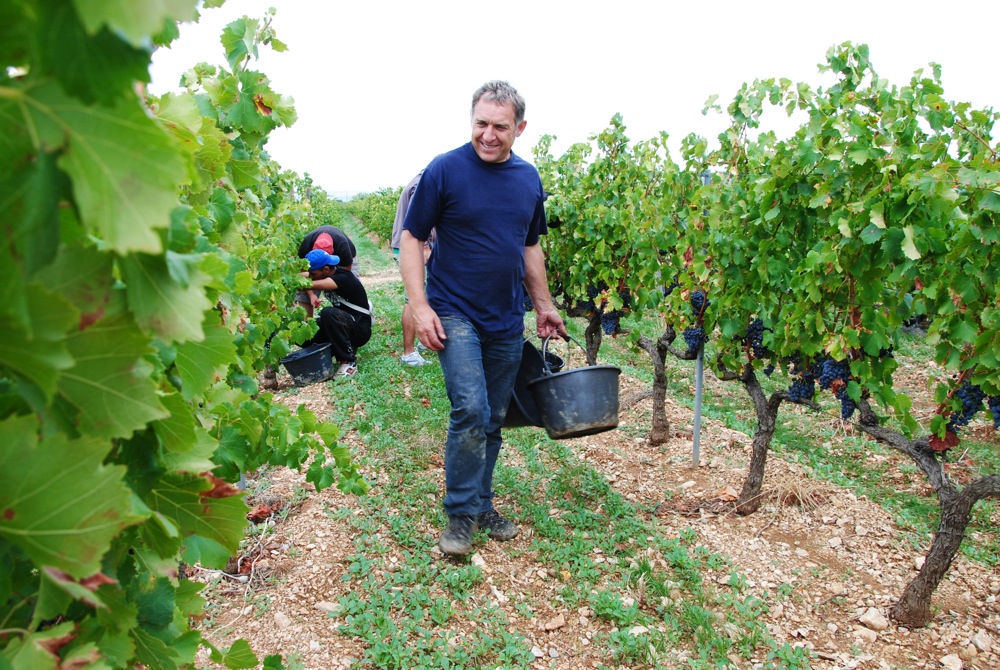
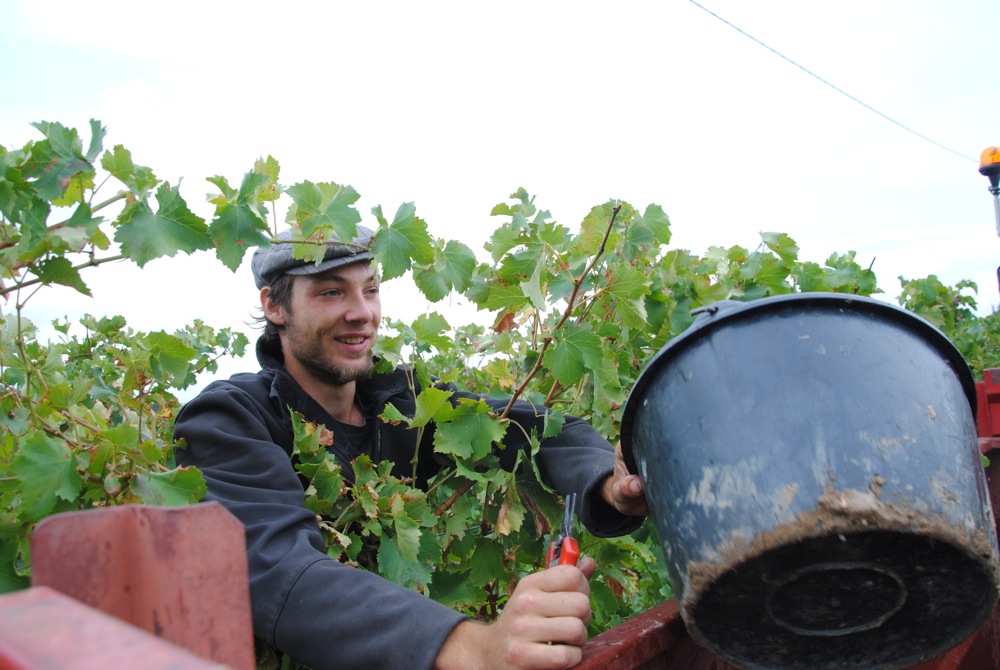
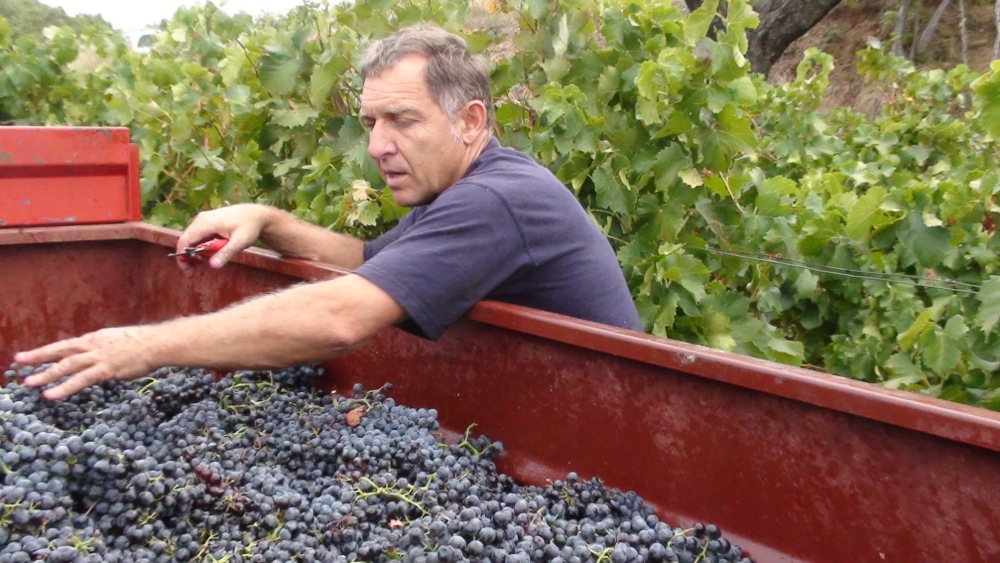
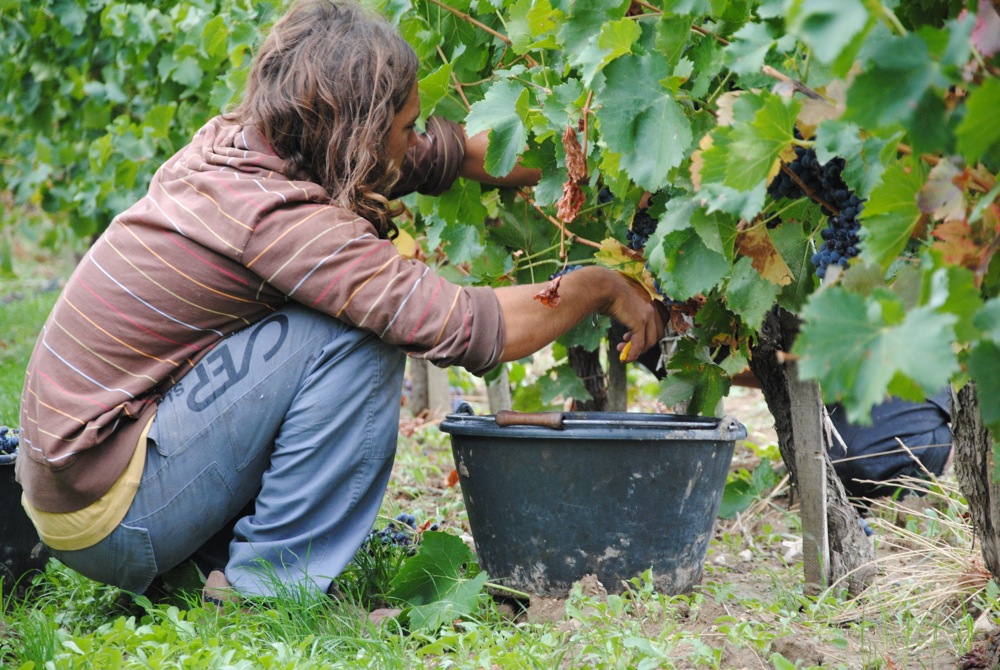
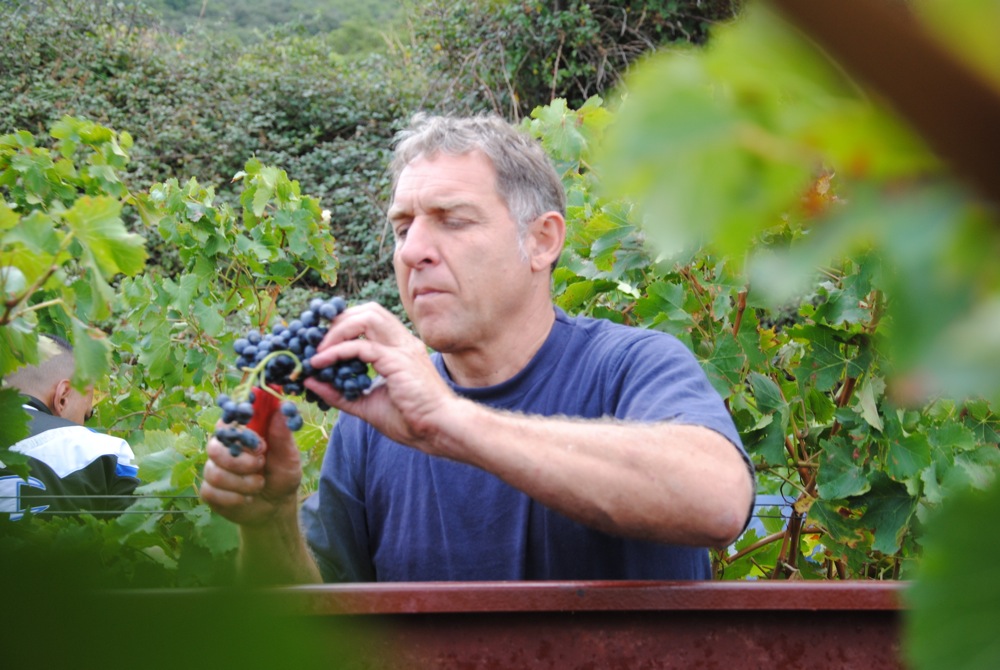
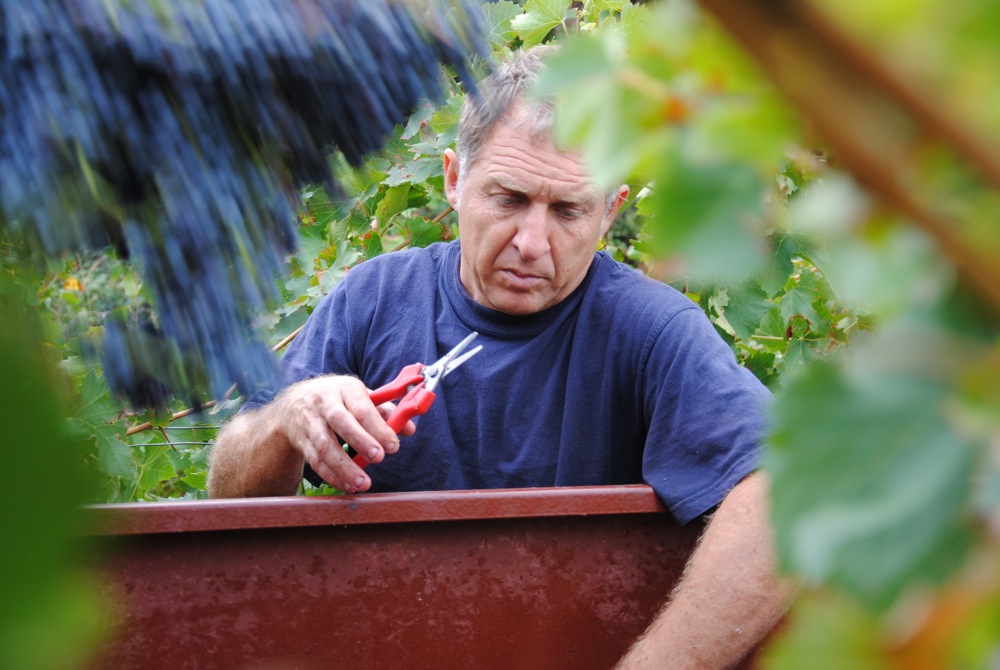
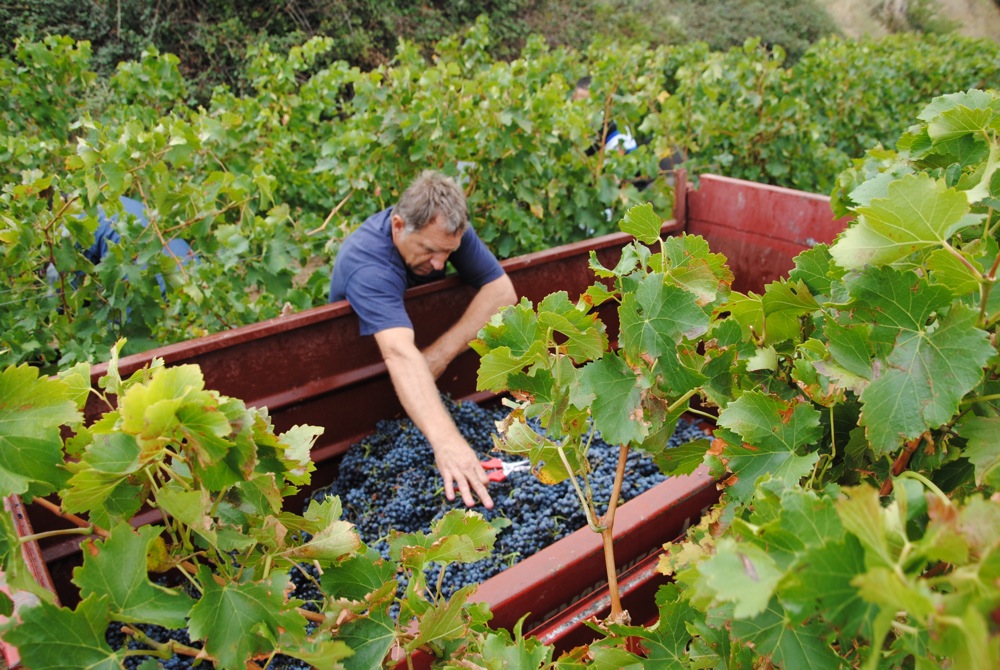
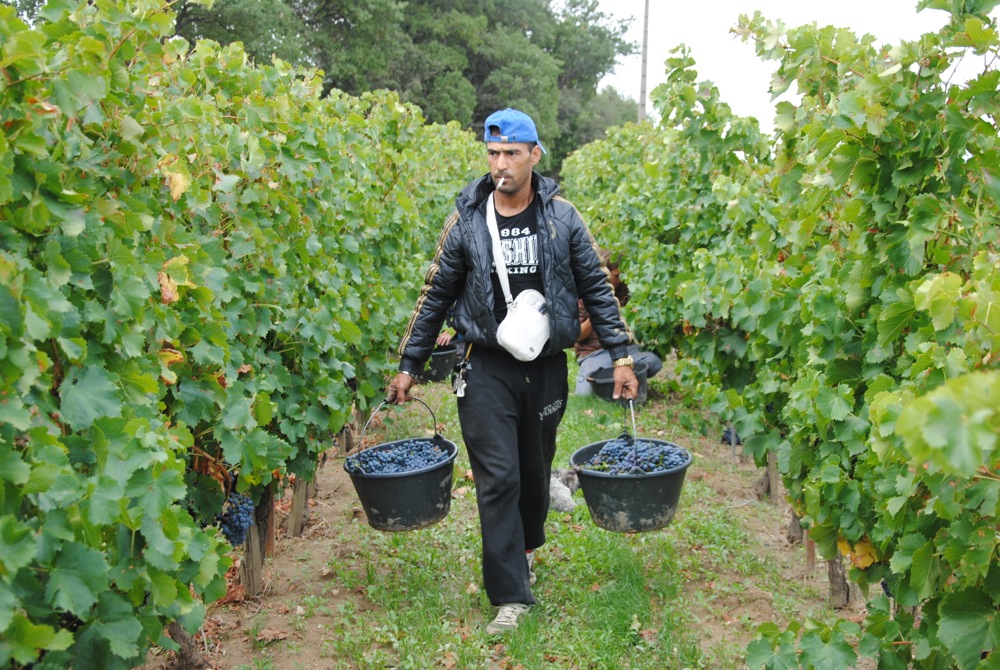
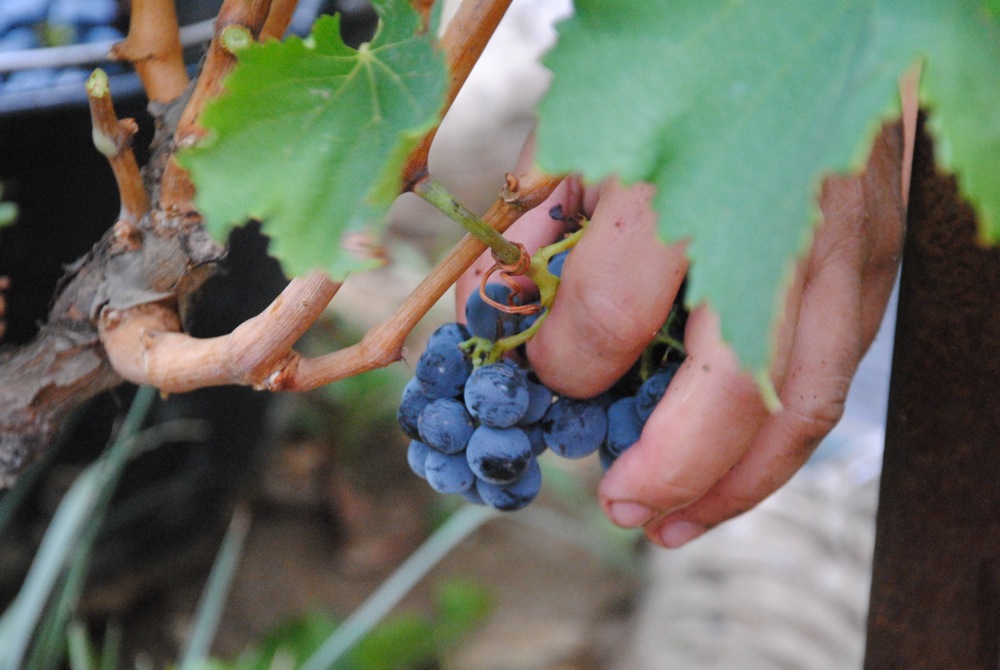
Under a grey but dry sky, Yves Gras is harvesting the last grapes of his most precocious vineyards in Gigondas and Vacqueyras. The rather international harvest team is meticulously sorting the grapes in the vineyards in a concentrated and in a jovial mood, while Yves bends over the trailer to remove the last “bad” grapes and leafs that might have fallen into the buckets. Few but juicy and savoury grapes for the 2012 vintage, by the way the first certified ORGANIC WINE of the Domaine Santa Duc, in vineyard and cellar.
The thunderstorms roaming around France towards the end of September, brought rather beneficial rain for the vineyards and grape varieties that ripen later and will be picked by mid October.
Although one of the most planted grape varieties in the world (around 200.000 hectares), Grenache is still unknown to a great number of wine drinkers, being in the shadow of the star varieties for the last decades – Cabernet & Co. Probably originating from Spain (named Garnacha there), it spreads all across the Mediterranean area during the late 19th century, where it produces some highly renowned wines today: Gigondas and Chateauneuf-du-Pape in the Rhone Valley, Priorat and Rioja in Spain, the wines from the Languedoc and Roussillon area, Provence…
Indeed, a great number of the world’s Grenache vineyards are based in France and Spain (some 85%), but also with growing success in other wine countries and regions, like South Australia and in California. Here the Rhone Rangers are advocates for this traditional Mediterranean grape variety as a great source of good wine.
Grenach wines often have a reputation of being powerful “fruit bombs”. This, in many cases istrue: Smooth and pleasantly mellow and smells of raspberry and strawberry… But they can be different, and a lot of wine lovers appreciate Grenache for its ability to ally power, delicacy, high aromatic complexity, fine tannins and an endless final.
To create these wines, you need great terroirs and attentive wine makers besides an interesting grape variety.
Lonesome rider and team worker
In certain wine regions, like the Rhone Valley for example, Grenache dares to overshadow Syrah and Mourvèdre. But even if it seems to rule out all other grapes in the Rhone Valley, it also appreciates good company. In many wines you will find Grenache accompanied by “old” and “new” grape varieties, really appreciating their characters: The fruitiness of Cinsault, the straight acidity of Carignan, the serious tannins of Mourvèdre in red and rosé wines, but also the powerful aromas of Viognier or the citric character of Vermentino in white wines.
But Grenache seems to have a particular affection towards Syrah. This highly appreciated grape variety seduces by its dark, mysterious colour, by aromas reaching from violet and raspberry to truffle and tobacco in old wines, and its legendary elegance that may temper the ardour of a Mediterranean Grenache.
But Grenache blends also popular outside of France. One of the best examples are the Australian “GSM” wines, inspired by the Rhone Valley and made of Grenache, Syrah and Mourvèdre.
The Pinot noir of the south?
Grenache has indeed some aspects in common with the famous grape variety from Burgundy.
First: Both grape varieties are grown in three different colours - blanc, gris and noir, or white, grey and black – and their grapes are processed to white, red and rosé wines.
Second: Both are very delicate grape varieties and their entire potential of taste and odour may be only unveiled by skilful hands.
Third: Characterized by light colour and powerful fruit aromas, both varieties may surprise by smells of spices and flowers in white and red wines.
But let’s turn back to our sunny Grenache. It’s true that Grenache wines may be high in alcohol in warm wine regions, with 14 to 15 % by Vol. frequently being found. But luckily for us, the alcohol content is not that important, as the taste of the wine mainly depends on balance.
Yves Gras, a wine grower and maker from Gigondas once told me, that “the secret of a great terroir is to preserve acidity in our Grenache grapes”. Just another secret of great wines…
Finally, I can’t but warmly recommend having a look on Grenache wines. Just taste them and make up your own opinion. Your taste buds surely will appreciate the experience!
Santa Duc Le Fournas Sablet blanc – a wine for day and night
This wine grown in the neighbouring village of Gigondas, called Sablet, combines Viognier from Condrieu to Mediterranean grape varieties: Bourboulenc and Grenache blanc- both accustomed to the hot climate and the strong Mistral wind – add lemon and sweetness to it, while Clairette blanc comes in with floral aromas that enhance the wine’s complexity.
A wine suits to all summer recipes you may imagine: green olive paste, grilled fish and vegetables, goat cheese with rosemary, sweet honey melons. Whatever you choose, it will surely give coolness and liveliness to your long summer nights…
Mourvèdre comes from Mars, Syrah from Venus – the “buddy” grape varieties at Domaine Santa Duc
Yes it’s true: In Gigondas the Grenache dares to overshadow Syrah and Mourvèdre. But even if it seems to rule out all in the Rhone Valley, it also appreciates good company.
That’s why Mourvèdre, and to a lesser extend Syrah, occupy an important place in our vineyards, for different reasons. La Syrah, one of the few ladies amongst French grape varieties, offers certain qualities that a Grenache may appreciate: A dark, mysterious colour, aromas reaching from violet and raspberry to truffle and tobacco in old wines, and its legendary elegance that may temper the ardour of a Mediterranean Grenache.
The Mourvèdre, a grape variety we particularly appreciate, often watches the other grape varieties from a distance. More serious and discreet, he acts like a real shadow man in our wines, who controls the cuvee from the wings. Black in colour and fruit, he’s mainly loved – and feared – because of the specific structure of his tannins.
As a grape variety that ripens late, it should only be planted in specific places, to avoid the risk of unripe fruits that shall only give a rude wine. The lower, alluvial parts of Les Hautes Garrignes, as well as the higher, calcareous parts of Gigondas, both terroirs where grapes ripen lately, particularly suite to Mourvèdre. It gives straightness and calmness to our wines, as well as crispy, fresh tannins.
Habemus Papam – we have a pope – that’s what we can claim now at Domaine Santa Duc, only few days after the bottling of our first wine grown in Châteauneuf-du-Pape.
Habemus Papam Santa Duc - VinParleur
We purchased our 40 year-old vineyard on the sandy soils in the north-eastern part of the appellation in 2009. Picked for the first time in 2010, a remarkable vintage in the Rhone Valley, partly destemmed grapes were fermented by natural yeast, before the wine took a 14 months rest in the wooden tanks of our cellars.
On the label we honour Jean XXII. Native of Cahors, he was the first pope to choose for Avignon as residence. As well, he planted the papal vineyards and ordered to build a new castle (château neuf) in the place that should become Châteauneuf-du-Pape.
This wine is made from a majority of Grenache, assisted by a few grapes of Mourvèdre: Lightly coloured, a fine and elegant nose, juicy, straight and mellow on the palate. After having been presented at different wine fairs and events all over Europe this spring, this daughter of Châteauneuf, born in the terroir of the Saintes Vièrges (the Blessed Virgins), a delicate neighbour of La Crau, is now ready to expose herself to your palates.
Of good spirit, our female pope invites you to savour, to drink and to laugh. Is this a veritable devine wine? It’s up to you to taste and see…
We are very happy to announce that we have purchased another 2,5 hectares of vineyards growing on the terroirs of La Crau and La Font du Pape in Châteauneuf-du-Pape, bringing the total surface of our vineyards in the appellation up to 3,75 hectares.




 RSS
RSS